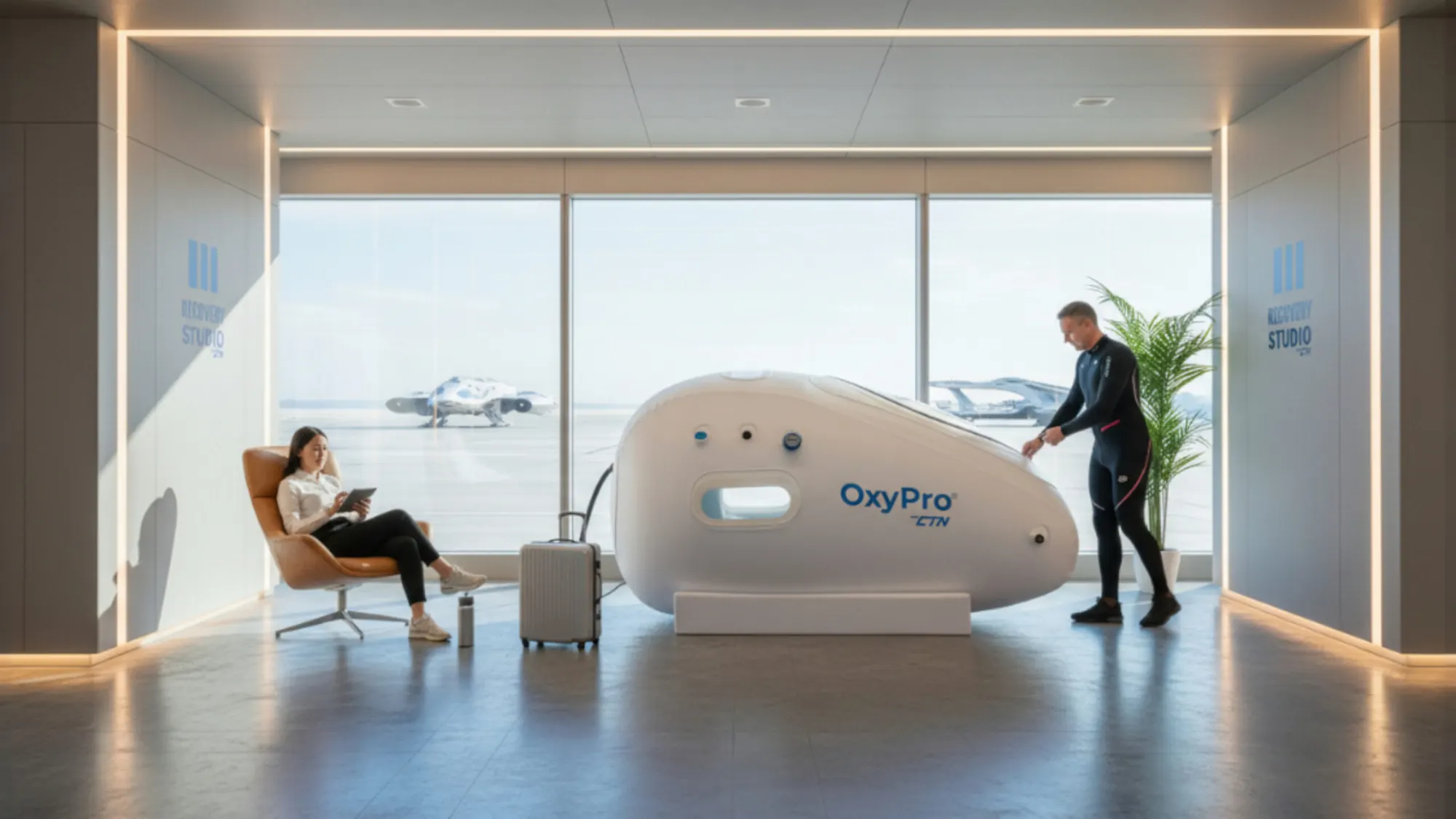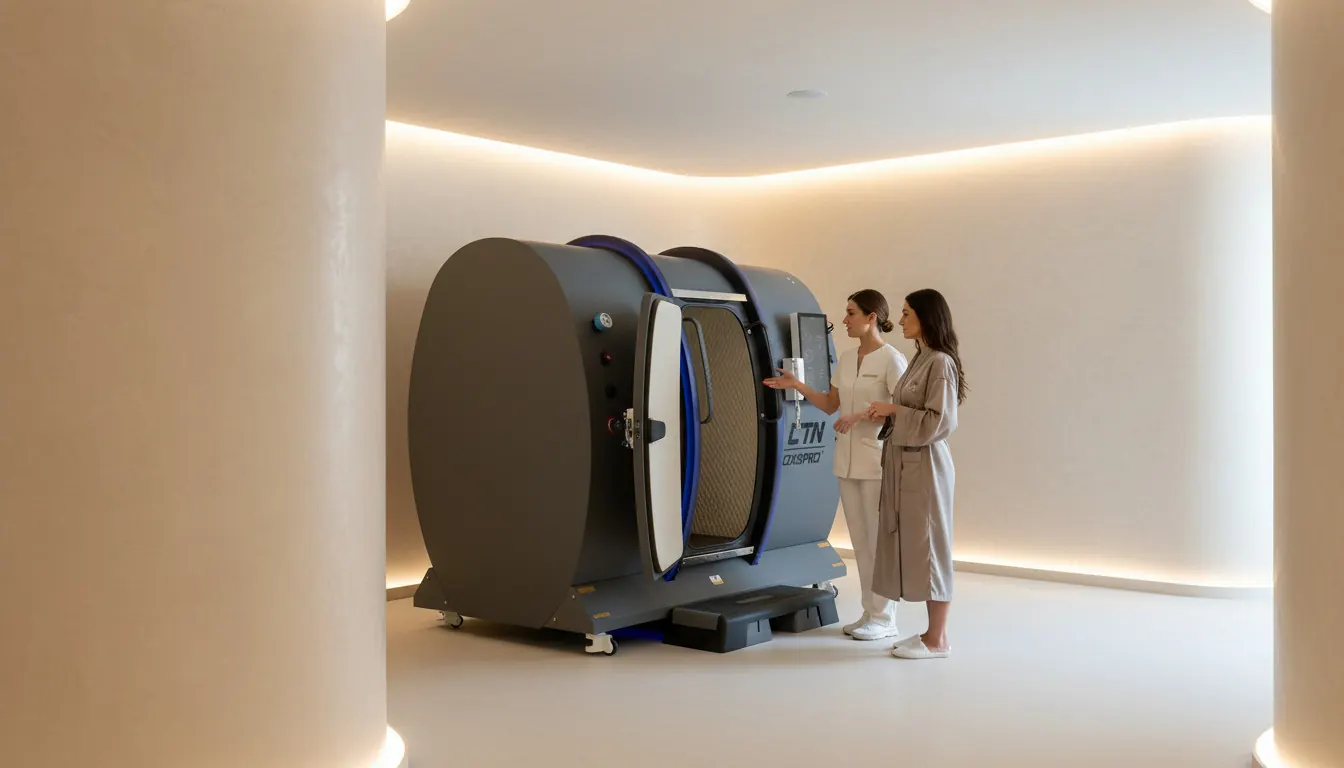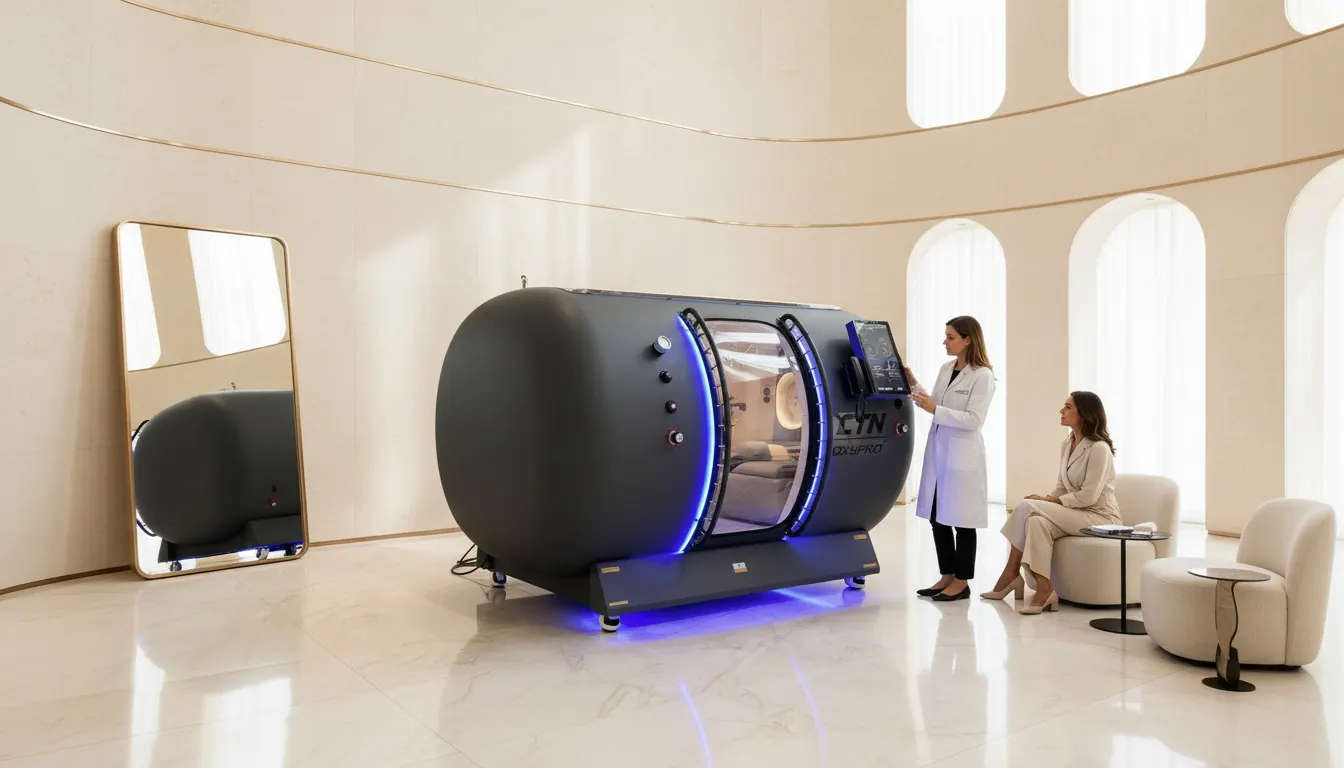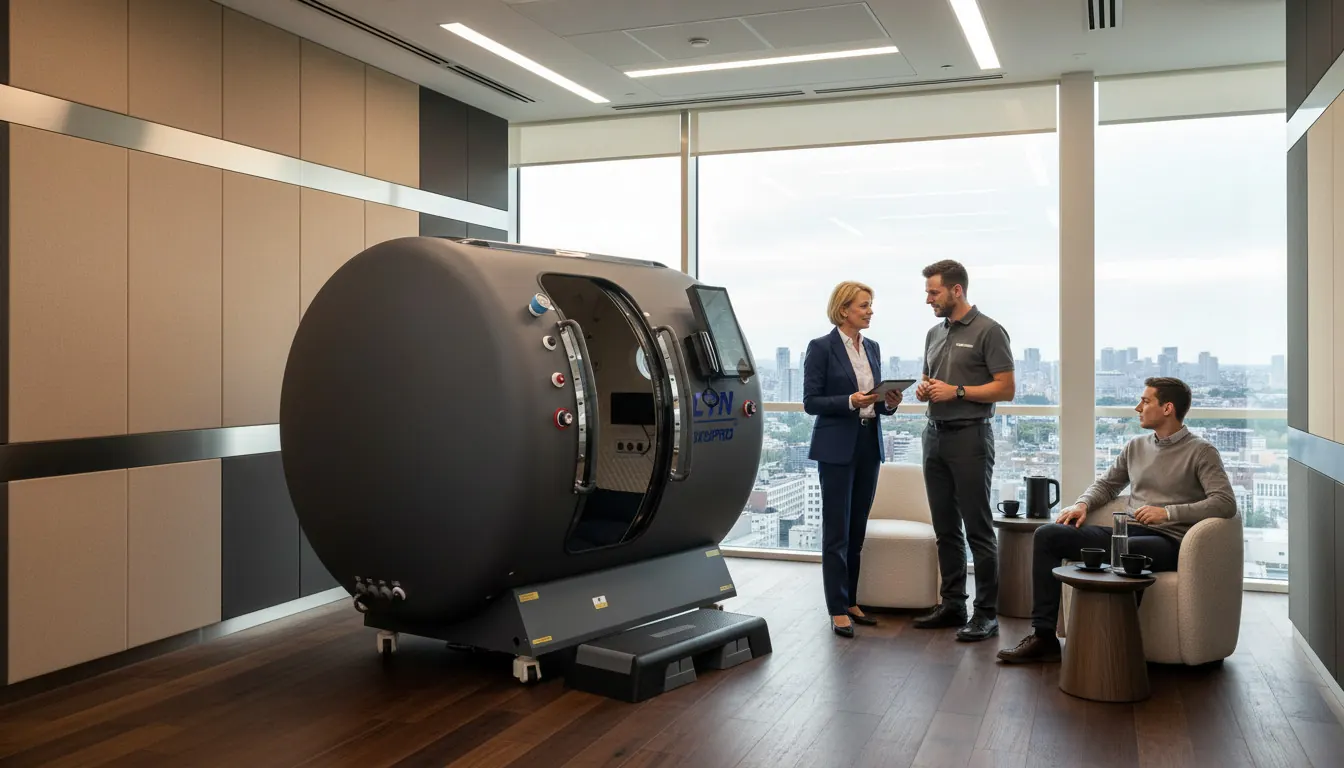
Almost every concern during a hyperbaric session comes down to ears. An operator who handles this well has calm clients and smooth sessions. This guide is for teams running any OxyPro™ chamber. It supports CTN's user guide and does not replace it.
Why ears notice
As the chamber pressure rises towards 1.5 ATA, the air outside the eardrum presses harder than the air behind it. The client feels fullness, as on a descending aeroplane. Opening the passage between the throat and the middle ear lets the pressure even out.
What to teach before the door closes
Show clients three simple ways to equalise.
- Swallow. Sipping water helps.
- Yawn or move the jaw.
- Pinch the nose and blow very gently with the mouth closed.
Tell them to do it early and often, before any discomfort builds.
Agree a signal
Clients must know how to tell you to pause.
- In a soft shell: a hand signal at the window.
- In a hard shell: the intercom.
Say clearly: "If your ears feel uncomfortable, tell me straight away and I will hold the pressure."
During pressurisation
- Raise the pressure slowly.
- Watch the client.
- If they signal, hold the pressure where it is and let them equalise.
- If the discomfort does not clear, lower the pressure slightly and try again.
- If it still does not clear, end the session slowly. Never push on.
During depressurisation
Ears usually adjust more easily on the way down. Still release the pressure slowly and check on the client.
Who should rebook
Ask every client, every visit: "Do you have a cold or blocked nose today?" If yes, rebook. Congestion makes equalising hard, and there is no benefit in trying.
Who needs a doctor's advice first
Your screening questionnaire should identify clients with ear, sinus, heart or lung conditions, recent surgery or pregnancy. They need their doctor's advice before a first session.
In a shared chamber
If one client cannot equalise, everyone's session is affected, because the chamber has one pressure. Brief thoroughly, ask the cold question at the door, and seat first timers where you can see them.
Your manner matters
Clients take their cue from you. A slow, clear briefing and an unhurried pressurisation prevent most problems.
Write it down
Note any session that was paused or ended early. Patterns help you improve the briefing.
CTN devices are CE marked wellness equipment, not medical devices.